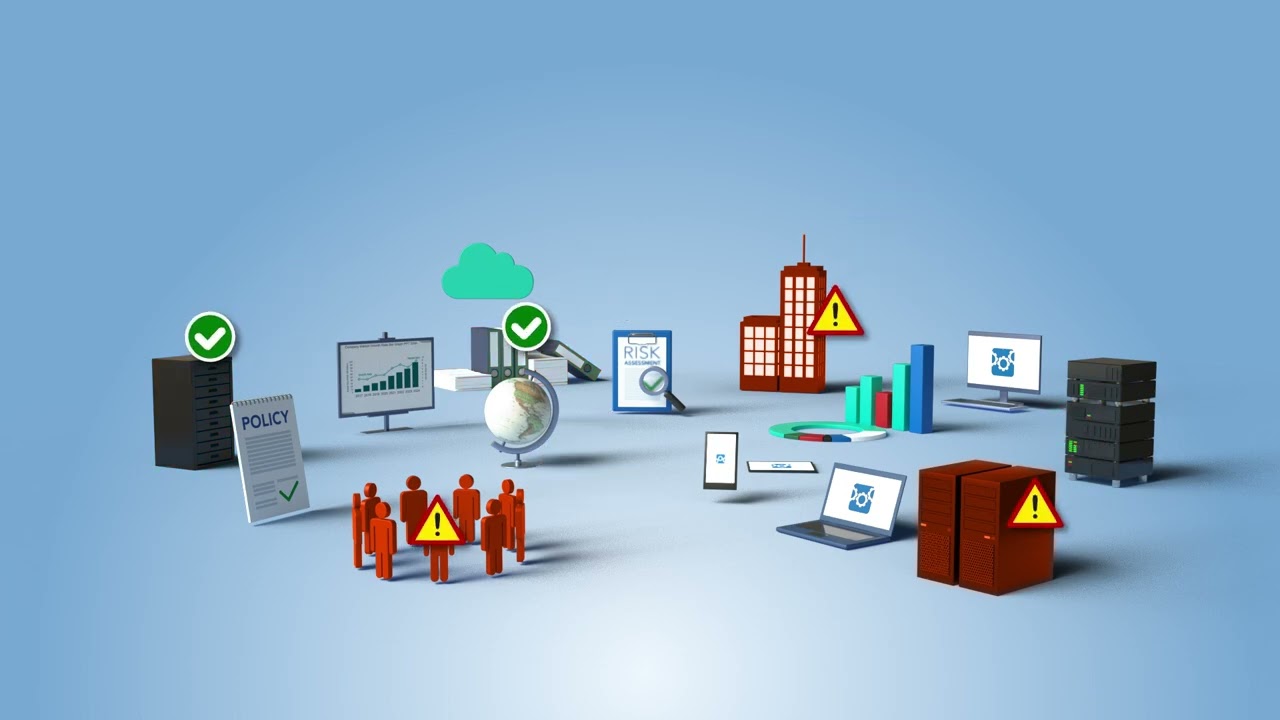
Identify and mitigate compliance gaps and risks to your organization!
Table of Contents
ToggleThe Continuum GRC ITAM SaaS platform has hundreds of plugin modules available, such as:
Compliance Gap Assessments
A Compliance Gap Assessment (also known as compliance gap analysis or regulatory gap analysis) is a structured, proactive evaluation process that compares an organization's current policies, procedures, controls, practices, and overall compliance posture against specific external requirements (such as laws, regulations, industry standards, or frameworks like GDPR, HIPAA, SOC 2, ISO 27001, PCI DSS, or NIST) or internal policies.
During a compliance gap assessment, various elements are reviewed, such as policies and procedures, internal controls, training and awareness programs, record-keeping practices, and data protection measures. The assessment typically involves a thorough examination of documentation, interviews with key personnel, and sometimes even physical inspections of facilities.
Once the assessment is complete, a report is generated outlining the identified gaps, their significance and impact, and recommendations for closing those gaps. These recommendations may include process improvements, policy revisions, training programs, or the implementation of new controls. The purpose of this assessment is to help the organization enhance its compliance efforts, mitigate risks, and meet legal and regulatory requirements.
Modules include:
- Stage 1 Gap Assessment - CMMC
- Stage 1 Gap Assessment - PCI
- Stage 1 Gap Assessment - SOC 1
- Stage 1 Gap Assessment - SOC 2
- Stage 1 Gap Assessment - NIST 800-171
- Stage 1 Gap Assessment - NIST 800-172
- Stage 1 Gap Assessment - NIST 800-53
- Stage 1 Gap Assessment - CJIS
- Stage 1 Gap Assessment - IRS 1075
- Stage 1 Gap Assessment - IRS 4812
- Stage 1 Gap Assessment - StateRAMP
- Stage 1 Gap Assessment - FedRAMP
Key Steps in Performing a Compliance Gap Assessment
While the exact process can vary by framework or industry, a typical assessment follows these phases:
- Define Scope and Objectives: Select the specific regulation(s), standard(s), or framework(s) to assess (e.g., HIPAA, GDPR, SOC 2 Trust Services Criteria). Identify relevant business units, processes, systems, and locations.
- Identify Requirements: Compile a comprehensive list of all applicable controls/requirements from the chosen standard (often using checklists, matrices, or automated tools).
- Assess Current State ("As-Is"): Gather evidence through:
- Document reviews (policies, procedures, logs).
- Interviews/surveys with employees and stakeholders.
- Observations, system scans, or testing.
- Internal audits or questionnaires.
- Perform Gap Analysis ("To-Be" Comparison): Map current practices against each requirement. Categorize findings as:
- Fully compliant
- Partially compliant
- Non-compliant
- Not applicable. Quantify gaps (e.g., severity, risk level, effort to remediate).
- Document Findings and Prioritize: Create a detailed report or compliance matrix highlighting gaps, root causes, and recommended actions. Prioritize based on risk, regulatory impact, cost, and business criticality.
- Develop and Execute a Remediation Plan: Assign owners, timelines, and resources for closing gaps (e.g., update policies, implement new controls, provide training).
- Monitor, Review, and Repeat: Track remediation progress, conduct follow-up testing, and schedule periodic reassessments (annually or after major changes).
FAQ
What exactly is a Compliance Gap Assessment?
A Compliance Gap Assessment (also called compliance gap analysis or regulatory gap analysis) is a structured, proactive evaluation that compares your organization's current policies, procedures, controls, practices, and compliance posture against specific external requirements — such as laws, regulations, or frameworks like GDPR, HIPAA, SOC 2, ISO 27001, PCI DSS, NIST (including 800-53, 800-171, 800-172), CMMC, CJIS, IRS 1075/4812, StateRAMP, FedRAMP — and internal policies. It identifies "gaps" where you're falling short and provides a prioritized roadmap to achieve full compliance.
How does a Compliance Gap Assessment differ from a Risk Assessment or Technical Gap Assessment?
A Compliance Gap Assessment focuses on comparing your current state to regulatory, legal, and standard requirements to find non-compliance areas. In contrast, a Risk Assessment evaluates threats, vulnerabilities, their likelihood, and potential impact, while a Technical Gap Assessment examines your existing security controls and systems for technical weaknesses or misalignments. These are complementary — many organizations perform them together for a complete picture, and Continuum GRC supports all three.
Why should my organization conduct a Compliance Gap Assessment?
It helps achieve or maintain readiness for certifications and audits, prioritizes remediation to save time and resources, reduces risks of fines, breaches, legal issues, or reputational damage, eliminates redundancies for better efficiency, prepares for regulatory changes or business events (like mergers), and builds trust with customers, partners, and regulators. It's often the foundational step in maturing your compliance program.
What frameworks and standards does Continuum GRC support for Compliance Gap Assessments?
Continuum GRC offers Stage 1 Gap Assessments tailored to a wide range of frameworks, including PCI, SOC 1, SOC 2, NIST 800-171, NIST 800-172, NIST 800-53, CMMC, CJIS, IRS 1075, IRS 4812, StateRAMP, and FedRAMP — plus others like GDPR, HIPAA, and ISO 27001. Our patent-pending ITAM SaaS platform auto-maps controls across 100+ standards for efficient, comprehensive coverage.
How does Continuum GRC make Compliance Gap Assessments more efficient?
We leverage our ITAM SaaS platform (including A.ITAM™) for automated evidence collection, control mapping, real-time compliance tracking, dynamic reporting, workflows, and task management. This reduces manual effort, accelerates the process, provides proactive insights, and supports ongoing sustainability — helping you move from reactive to proactive compliance faster and more cost-effectively.
Who benefits most from a Compliance Gap Assessment with Continuum GRC?
Organizations in regulated industries — such as healthcare (HIPAA), finance (PCI/SOC), government contracting (FedRAMP/StateRAMP/CMMC/CJIS), technology, and any business handling sensitive data — gain the most. If you're preparing for audits, pursuing certifications, facing new regulations, or wanting to proactively identify and close compliance gaps, our expert-led Stage 1 assessments and platform deliver tailored, actionable results.
What are you waiting for?
You are just a conversation away from putting the power of Continuum GRC to work for you.
Contact us using the form below or calling us at 1-888-896-6207 for immediate assistance.
Why Conduct a Compliance Gap Assessment?
Organizations perform these assessments to:
- Achieve or maintain regulatory/certification readiness.
- Prioritize remediation efforts and allocate resources efficiently.
- Reduce risk of penalties, data breaches, or legal issues.
- Improve operational efficiency by eliminating redundancies.
- Prepare for audits, new regulations, mergers, or significant business changes.
- Build stakeholder trust (customers, partners, regulators).
It is often the first major step in building or maturing a compliance program and is distinct from a risk assessment (which focuses on threats/vulnerabilities and their likelihood/impact), though the two are frequently used together.