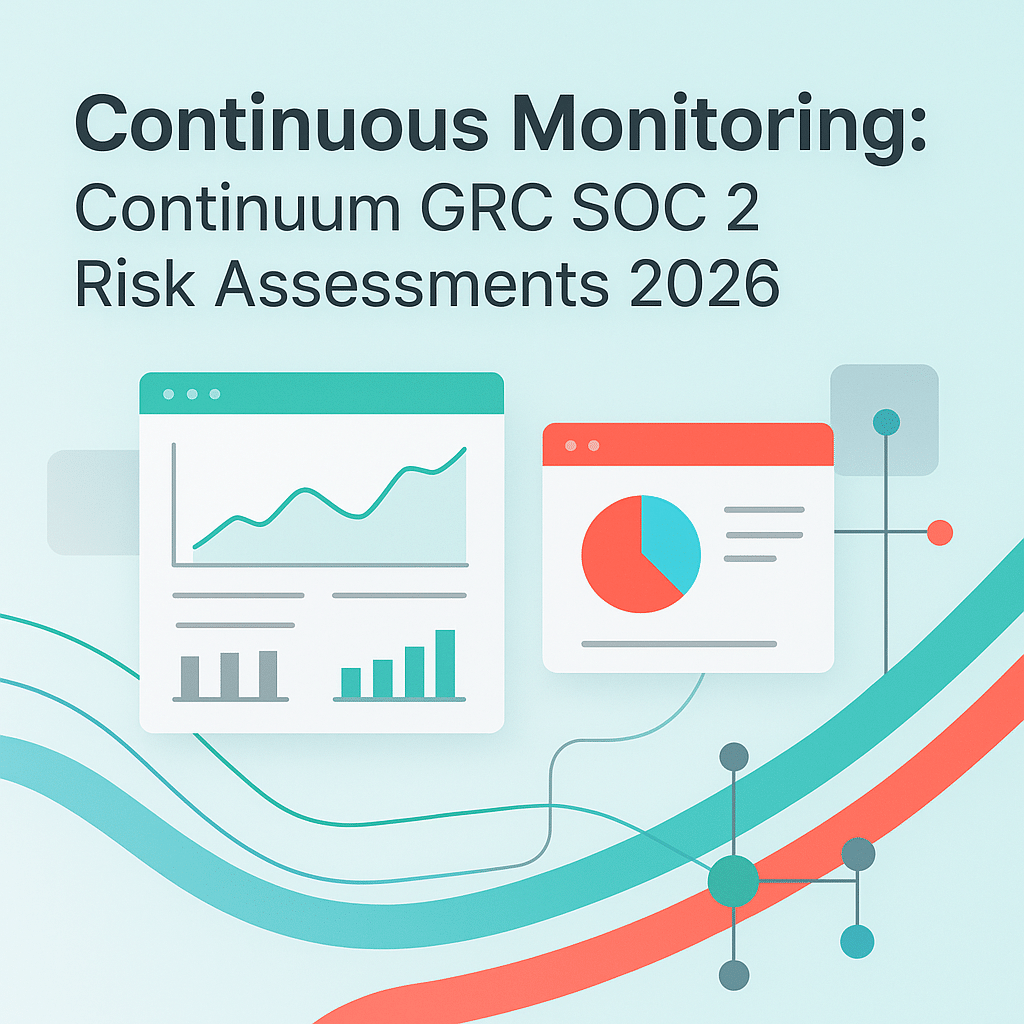
In 2026, continuous monitoring has emerged as the cornerstone of effective SOC 2 risk assessments, replacing outdated point-in-time audits with ongoing validation of control effectiveness amid rising supply-chain threats. Continuum GRC helps organizations implement these practices to maintain compliance across complex regulatory environments.
Key Takeaways for SOC 2 Continuous Monitoring in 2026
- Point-in-time SOC 2 Type II attestations are giving way to evidence of sustained operating effectiveness, driven by 48% third-party involvement in breaches.
- Cross-mapping controls across NIST SP 800-171 Rev. 2, NIST CSF 2.0, and SOC 2 Trust Services Criteria reduces duplicate evidence collection.
- Automation of Key Security Indicators (KSIs) from FedRAMP 20x principles directly supports SOC 2 continuous validation requirements.
- Organizations face increased breach costs of $201,112 when failing multi-jurisdictional privacy obligations tied to continuous oversight.
Why Continuous Monitoring Replaces Static SOC 2 Audits
The Verizon 2026 Data Breach Investigations Report highlights that 48% of breaches involve third parties, making static snapshots insufficient for SOC 2 Trust Services Criteria. Continuous monitoring delivers real-time evidence that controls operate effectively throughout the assessment period rather than at a single moment. This shift aligns with the Progression analysis showing SOC 2 Type II reports now demand ongoing operating effectiveness data.
Regulatory Drivers Behind the Change
FedRAMP 20x Consolidated Rules for 2026 emphasize continuous validation through KSIs and certification classes A–C, closing Rev 5 applications in 2027. NIST CSF 2.0 integration with enterprise risk management, per NIST SP 1308, requires continuous reassessment as business context evolves. These frameworks interoperate with SOC 2 by mapping overlapping controls, such as access management and incident response, reducing audit fatigue.
Implementation Framework for Continuum GRC SOC 2 Risk Assessments
Continuum GRC recommends a phased approach beginning with unified control libraries that cross-map SOC 2 criteria to NIST SP 800-171 Rev. 2 and CMMC requirements. This enables traceability matrices that eliminate redundant evidence collection while satisfying DFARS 252.204-7012 obligations that remain in force despite CMMC Phase 2 adjustments.
Step-by-Step Methodology
- Inventory assets and data flows against SOC 2 Trust Services Criteria and NIST CSF 2.0 governance outcomes.
- Deploy automated monitoring for security configurations with logging intervals aligned to PCI DSS v4.0.1 targeted risk analyses.
- Establish Key Security Indicators dashboards that feed directly into SOC 2 evidence repositories.
- Conduct quarterly cross-framework gap analyses incorporating NIST AI RMF revisions where generative AI tools support compliance workflows.
- Perform annual affirmations and SPRS score submissions while maintaining continuous validation trails.
Common Pitfalls to Avoid in Continuous Monitoring Programs
- Over-reliance on manual evidence collection instead of automated KSIs leads to incomplete audit trails during SOC 2 examinations.
- Failure to update control mappings when NIST SP 800-82 Rev 4 guidance expands OT coverage creates blind spots in hybrid environments.
- Ignoring multi-jurisdictional consent and retention rules under HIPAA, GDPR, and CCPA inflates breach costs by an average of $201,112.
- Neglecting workforce planning linkages from NIST SP 1308 results in inadequate staffing for ongoing risk reassessment.
Frequently Asked Questions
How does continuous monitoring integrate with existing SOC 2 Type II processes?
It augments Type II reports by providing evidence streams that demonstrate control performance across the full review period, satisfying auditor demands for operating effectiveness rather than design-only validation.
What resource commitments are required for 2026 implementations?
Organizations typically allocate 3–6 months for initial mapping and tooling deployment, followed by ongoing quarterly reviews, with costs scaling according to environment complexity and automation maturity.
Sources and References
- FedRAMP.gov – Latest Updates and Changelog
- LinkedIn (Sullivan) – 7 Signals in the ISO 42001 Adoption Data (2026)
- NHIMG – What Is Cross-Mapping? Definition & Examples
- PCI Security Standards Council – Official PCI Security Standards Council Site
- Progression – SOC 2 in 2026: Why Point-in-Time Audits No Longer…
- Csrc.Nist – Draft Guide to OT Security
About Continuum GRC
We also provide risk management and compliance support for every major regulation and compliance framework on the market, including:
- FedRAMP
- GovRAMP
- GDPR
- NIST 800-53
- DFARS NIST 800-171, 800-172
- CMMC
- SOC 1, SOC 2
- HIPAA
- PCI DSS 4.0
- IRS 1075, 4812
- COSO SOX
- ISO 27000 Series
- ISO 9000 Series
- CJIS
- C5
- LADMF
- 100+ Frameworks
Continuum GRC is a proactive cybersecurity® and the only FedRAMP-authorized cybersecurity audit platform in the world. Call 1-888-896-6207 to discuss your organization’s cybersecurity needs and learn how we can help protect your systems and ensure compliance.
Related Posts