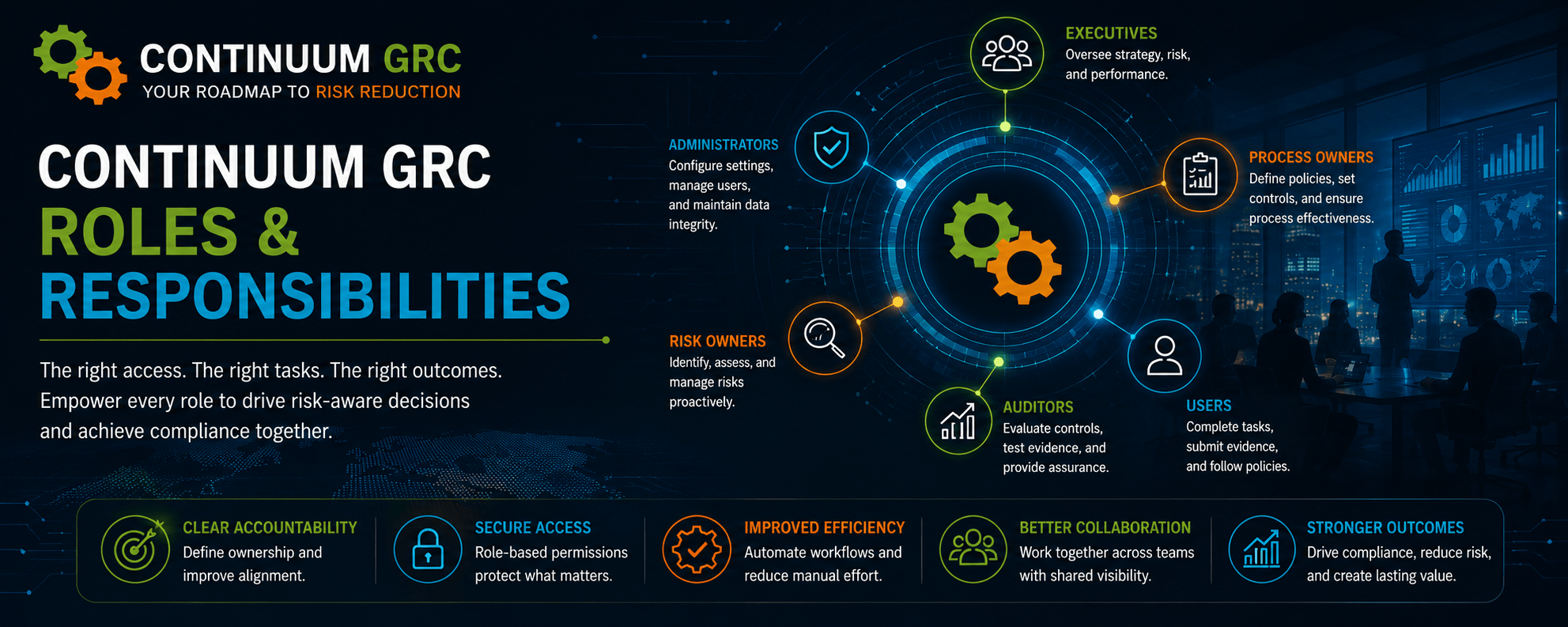
Continuum GRC Roles and Responsibilities: Administrator, Project Manager, Examiner, Facilitator & User
Table of Contents
ToggleContinuum GRC uses five primary platform roles—Administrator, Project Manager, Examiner, Facilitator, and User—to separate platform administration, independent assessment, compliance readiness, and organizational participation. Each role has distinct responsibilities, permissions, and functions within the GRC and assessment lifecycle.
How Continuum GRC Roles Work Together
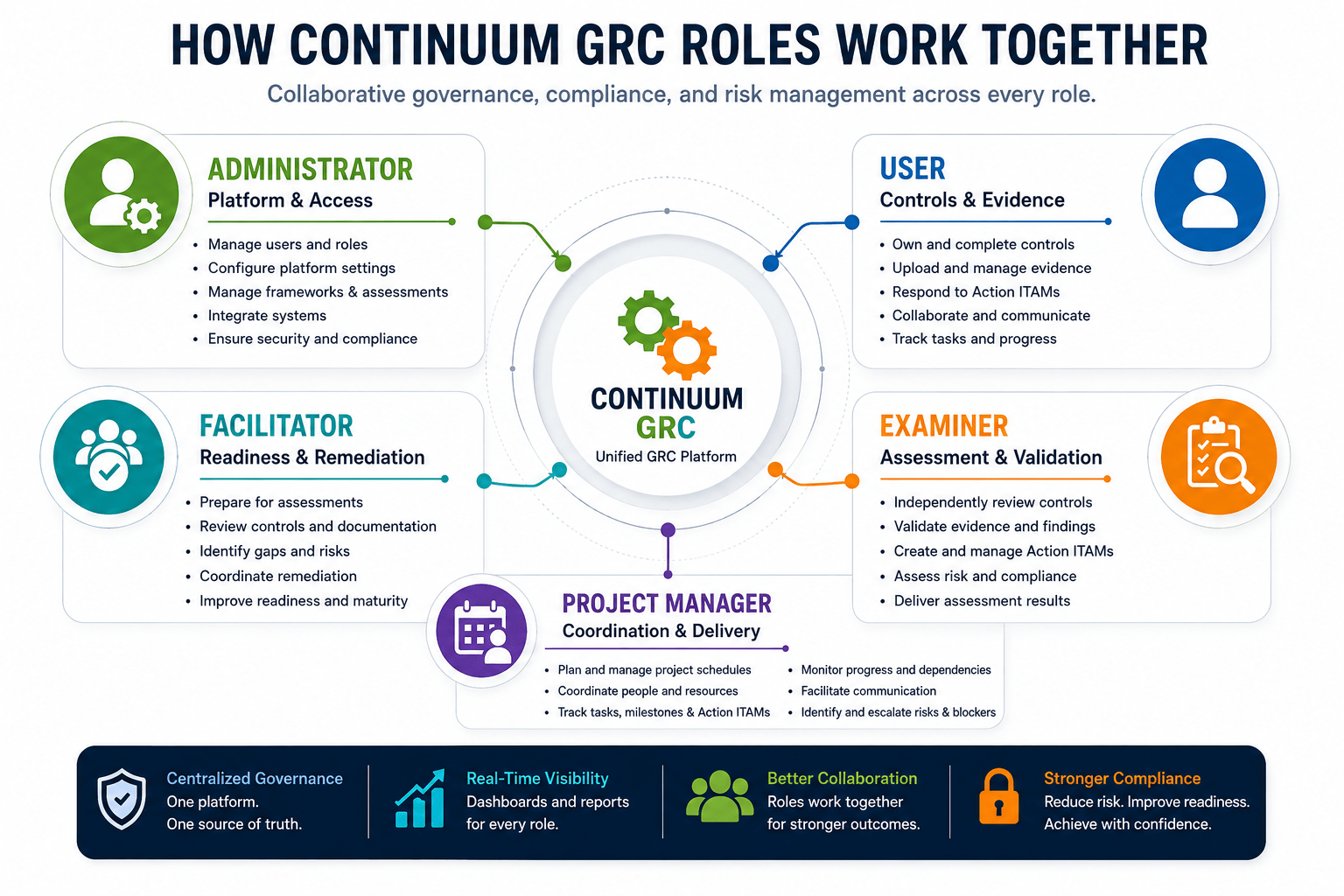
The Administrator configures and governs the platform environment. Project Managers coordinate engagements by managing schedules, assignments, milestones, resources, dependencies, and stakeholder communication. Users complete assigned compliance work and provide supporting evidence. Facilitators and Readiness Providers help organizations prepare controls and documentation, identify gaps, and coordinate remediation in preparation for assessment. Examiners independently review controls and evidence, document findings, assess compliance, and determine whether assessment requirements have been satisfied.
Together, these roles create a coordinated workflow in which Administrators enable, Project Managers coordinate, Users implement, Facilitators prepare, and Examiners assess.
Continuum GRC Role Comparison
Continuum GRC uses distinct roles to separate platform administration, project coordination, compliance activities, assessment readiness, and independent validation. Each role has specific responsibilities within the governance, risk, compliance, and assessment lifecycle.
| Role | Primary Purpose | Key Responsibilities | Typical Activities |
|---|---|---|---|
| Administrator | Platform & Access | Configure and manage the Continuum GRC environment, users, permissions, frameworks, assessments, integrations, and platform settings. |
|
| Project Manager | Coordination & Delivery | Coordinate the execution and progress of the engagement by managing schedules, assignments, milestones, resources, dependencies, and stakeholder communication. |
|
| User | Controls & Evidence | Perform assigned compliance activities, complete controls, provide evidence, respond to requests, and collaborate with other stakeholders. |
|
| Facilitator / Readiness Provider | Readiness & Remediation | Help organizations prepare for assessments by reviewing controls and documentation, identifying gaps, coordinating remediation, and improving assessment readiness. |
|
| Examiner | Assessment & Validation | Independently evaluate controls and evidence, document findings, assess risk and compliance, and determine whether assessment requirements have been satisfied. |
|
How the roles work together: Administrators enable and govern the environment; Project Managers coordinate delivery; Users perform and document compliance work; Facilitators prepare and remediate; and Examiners independently assess and validate the resulting controls and evidence.
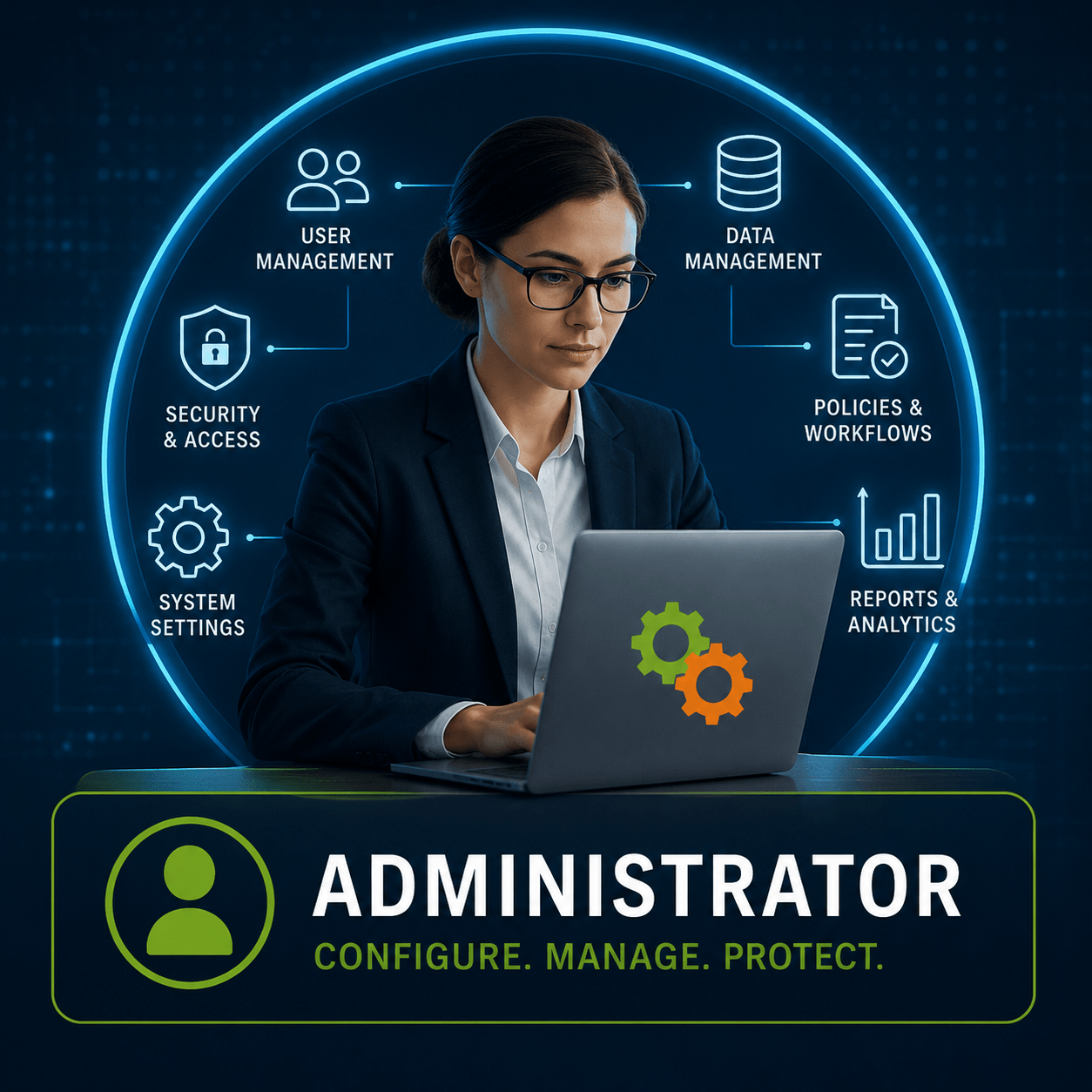
Continuum GRC Administrator Role
Within Continuum GRC, the Administrator is the platform-management role. The Administrator is responsible for configuring, governing, and supporting the environment in which the work happens.
The Administrator role is responsible for the following:
- User and access administration: creating accounts, assigning appropriate roles/entities, and managing account status.
- Platform and assessment configuration: setting up or maintaining the structures that users and examiners work within.
- Permission and visibility management: ensuring people can see the appropriate clients, projects, forms, and functions.
- Operational support: addressing configuration, mapping, access, and integration issues that prevent the assessment team from working correctly.
- Higher-privilege platform functions: performing administrative activities that are intentionally outside the normal Examiner workflow.
Administrator: account lifecycle, role assignment, entity access, framework/assessment setup, configuration, integrations, visibility, security boundaries, and troubleshooting.
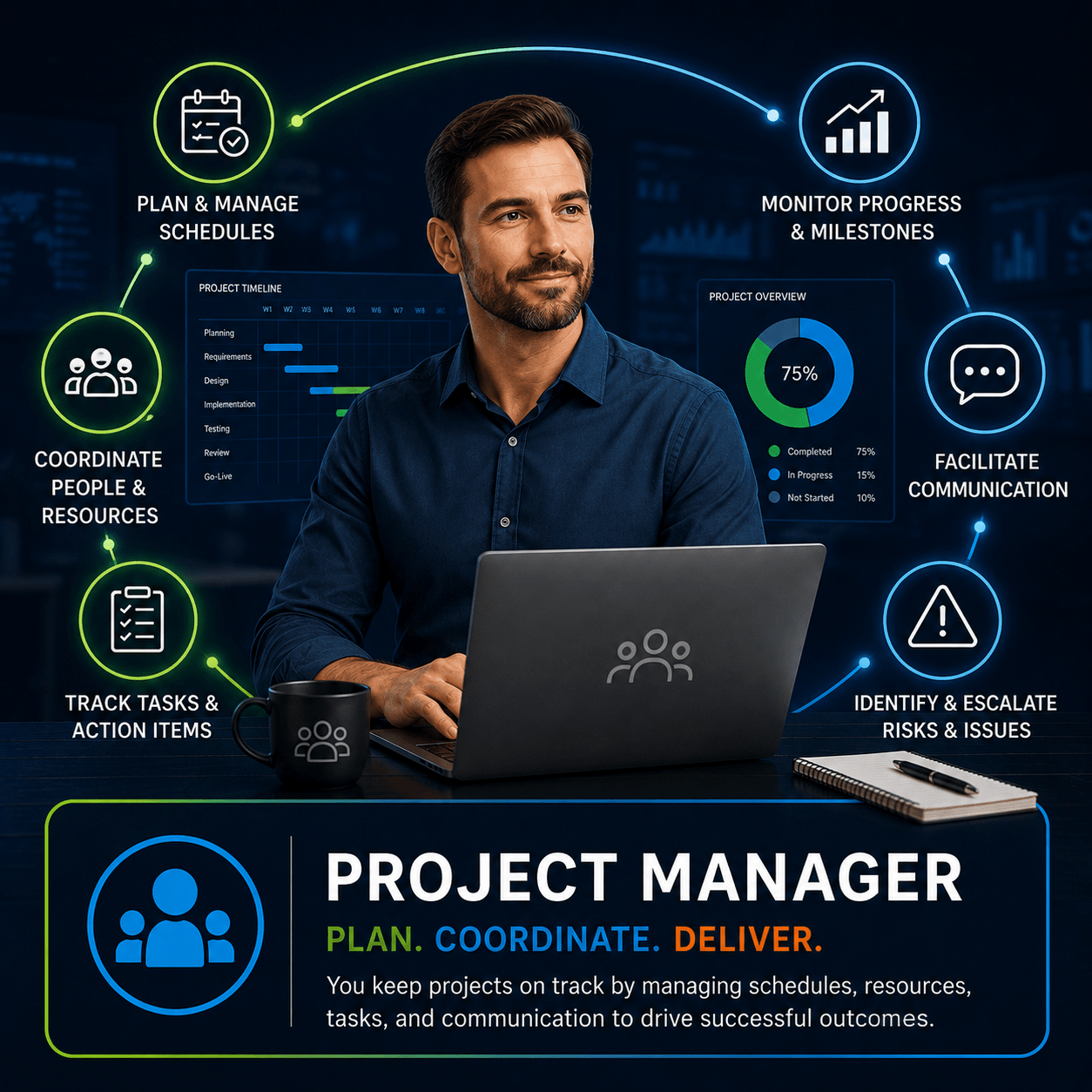
Continuum GRC Project Manager Role
Within Continuum GRC, the Project Manager is the engagement coordination and delivery-management role. The Project Manager is responsible for organizing, monitoring, and coordinating the people, activities, schedules, and dependencies required to keep an engagement progressing toward successful completion.
The Project Manager role is responsible for the following:
- Project planning and scheduling: establishing and maintaining project schedules, milestones, priorities, and target completion dates.
- Assignment and resource coordination: coordinating participants, responsibilities, workloads, and resources across the engagement.
- Progress and milestone tracking: monitoring overall project status, completion progress, dependencies, Action ITAMs, and other outstanding activities.
- Communication and collaboration: facilitating communication among Users, Facilitators/Readiness Providers, Examiners, Administrators, and other stakeholders.
- Risk, issue, and blocker management: identifying project-level risks, delays, dependencies, and blockers and escalating them to the appropriate stakeholders.
- Delivery oversight: keeping readiness, remediation, and assessment activities aligned with project objectives, scope, schedule, and expected outcomes.
Project Manager: project planning, schedules, milestones, assignments, resource coordination, progress tracking, Action ITAM oversight, stakeholder communication, dependencies, risk and issue escalation, and delivery coordination
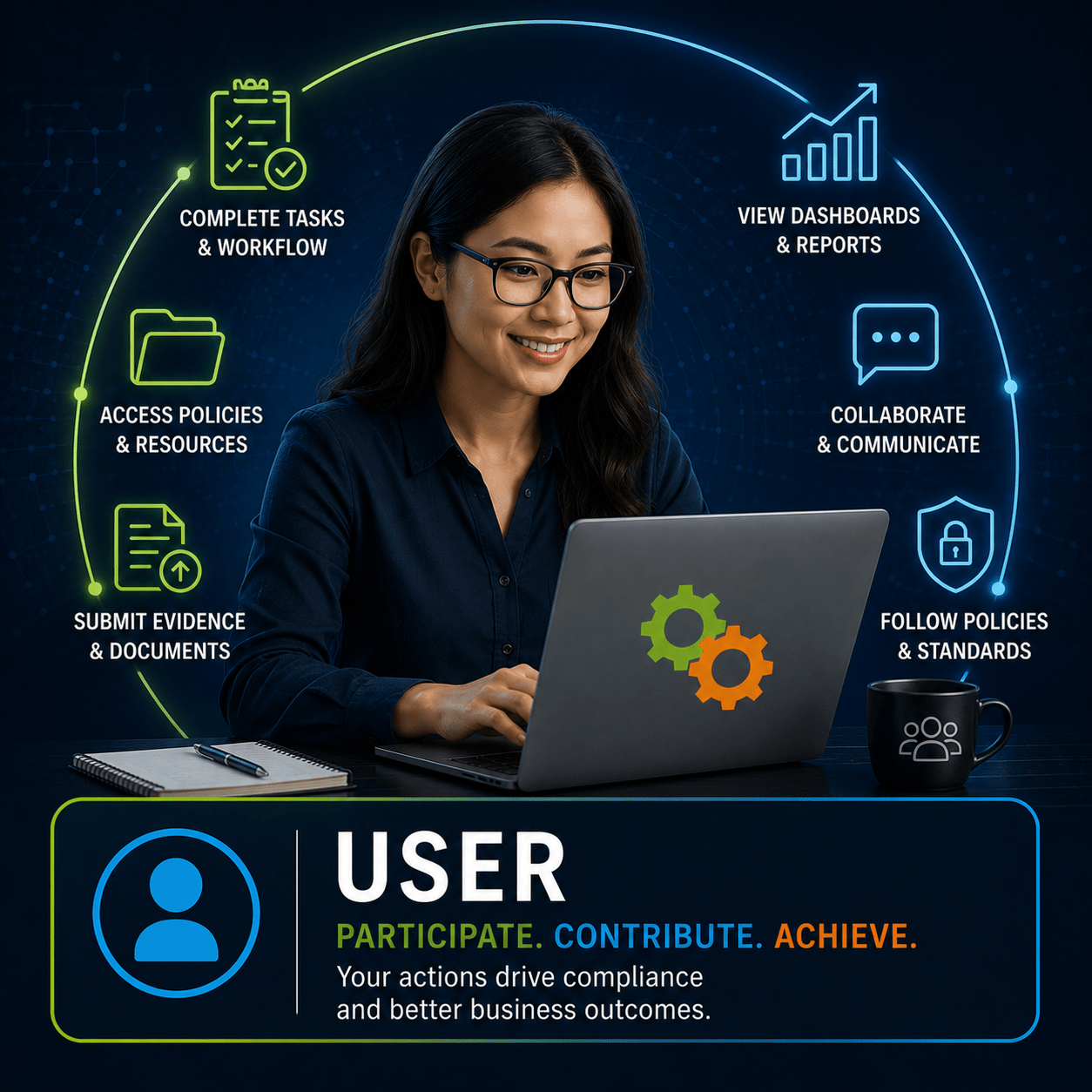
Continuum GRC User Role
The User is generally the client/contributor role—the person responsible for supplying and maintaining the information that an Examiner evaluates.
A User typically:
- Works on assigned controls or requirements, providing the organization’s responses and implementation information.
- Uploads and manages evidence supporting those responses.
- Responds to Action ITAMs when an Examiner requests clarification, additional evidence, corrections, or remediation.
- Updates assessment information while the assessment is open for collaboration.
- Tracks progress on the controls, tasks, and other items available to them.
- Operates within assigned permissions, rather than administering the overall Continuum GRC environment or making the Examiner’s assessment determination.
User: control ownership, evidence submission, Action ITAM responses, remediation, collaboration, progress tracking, dashboards, and permissions.
Continuum GRC Facilitator Role
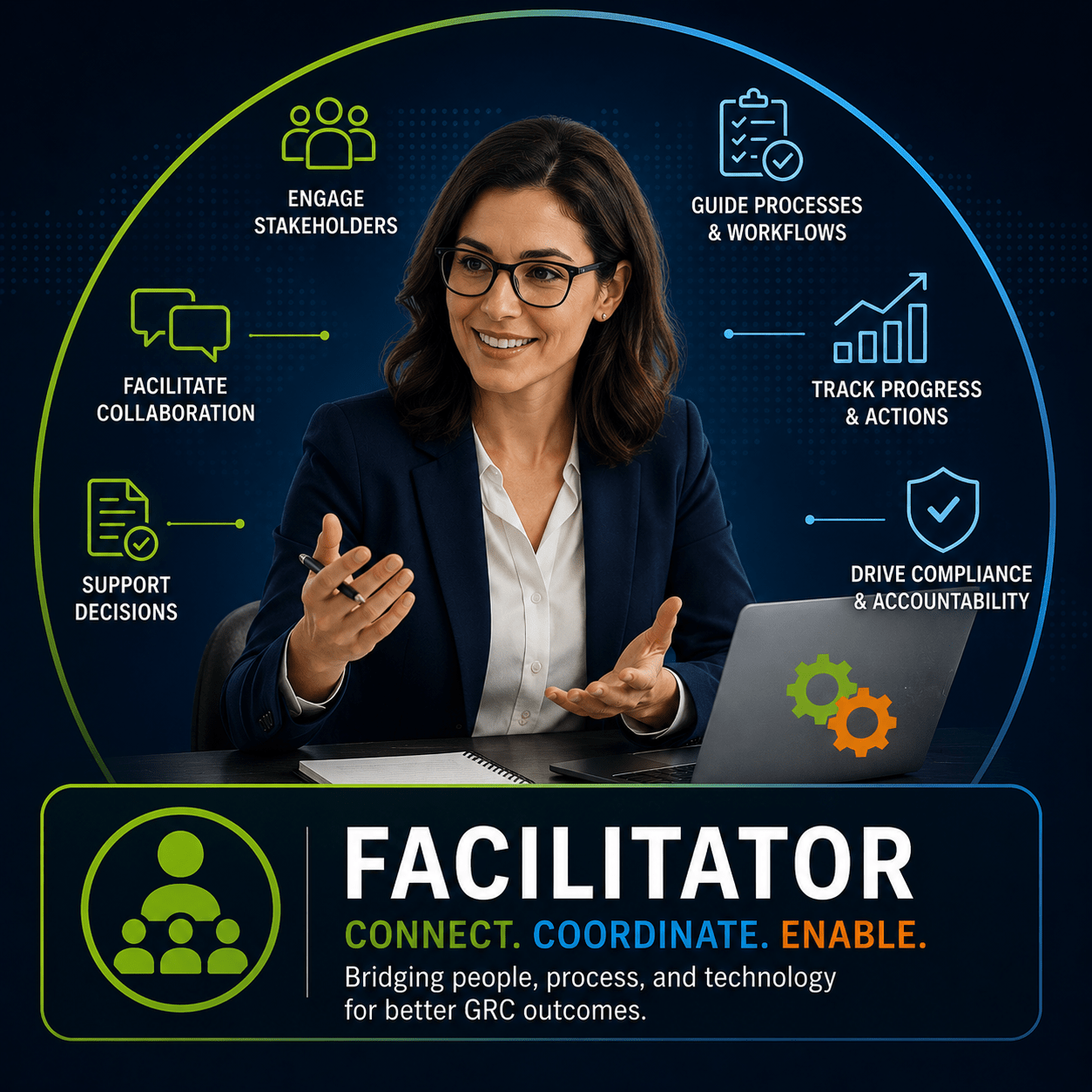
The Facilitator is the advisory/pre-assessment role. Its purpose is to help an organization become ready for the formal assessment, rather than to act as the independent Examiner who ultimately evaluates the organization.
In practical terms, the Facilitator would typically:
- Guides the client through readiness activities and helps them understand what a framework or assessment requires.
- Reviews controls and evidence for readiness, identifying gaps before those items reach the formal Examiner.
- Helps develop and improve documentation and evidence, including control narratives, policies, procedures, and supporting artifacts.
- Coordinates remediation, helping the client resolve deficiencies and organize outstanding work.
- Facilitates the assessment process, serving as an intermediary between the organization’s contributors and the eventual assessment/testing process.
- Does not serve as the final independent assessor. That separation is important: readiness work prepares and advises; examination determines whether requirements have actually been satisfied.
Continuum GRC Examiner Role
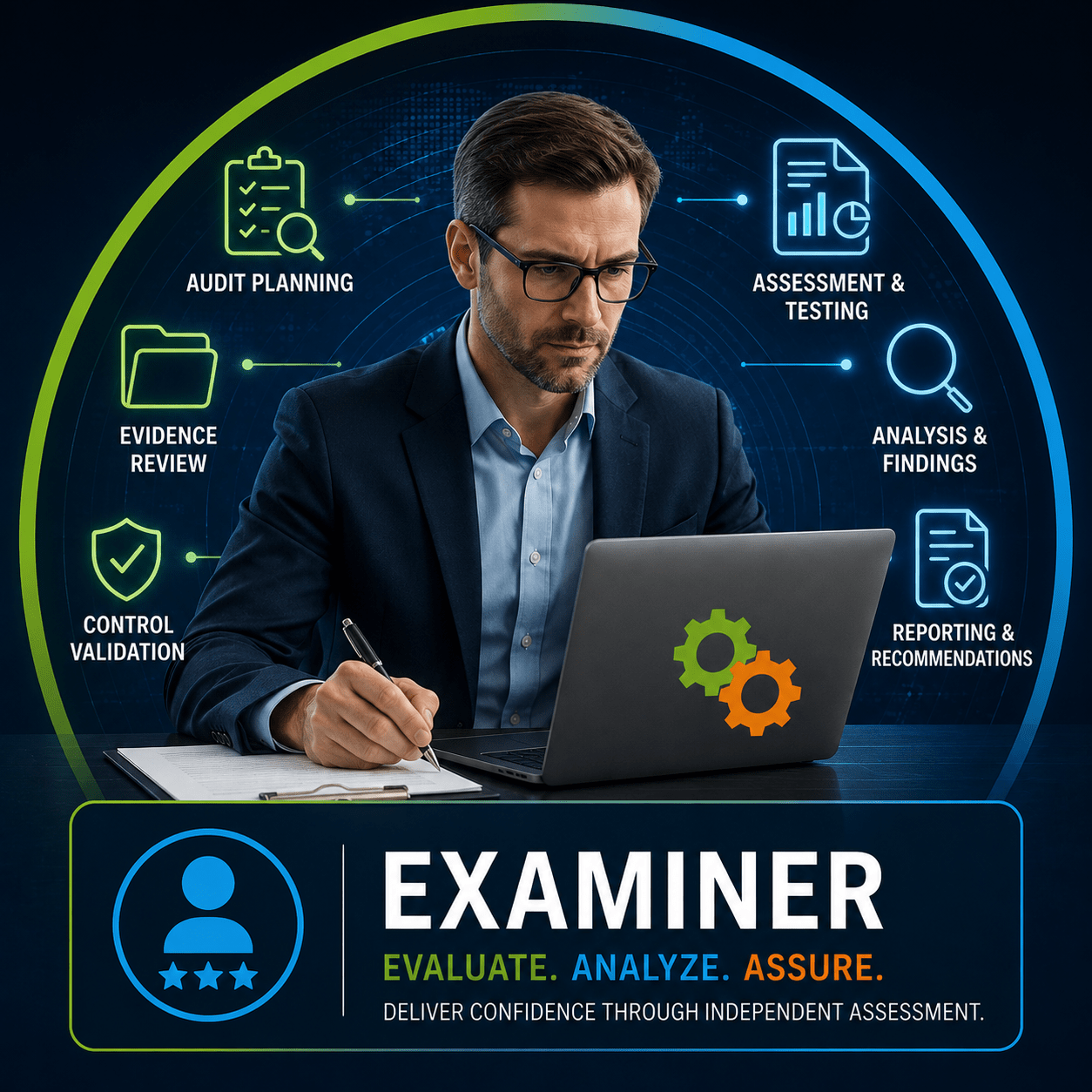
In practical terms, an Examiner:
- Reviews controls and supporting evidence to determine whether requirements are adequately satisfied. The platform provides Risk Score and AI-assisted tools to help evaluate test descriptions, uploaded artifacts, testing, and control responses.
- Manages assessment status. Examiners can move work through statuses such as Under Review, Needs Attention, Complete, or Failed. “Complete” represents work reviewed and approved by the assessor, while “Failed” indicates that requirements were not met.
- Creates and manages Action ITAMs when the client needs to provide clarification, remediation, missing evidence, or other follow-up. The guide explicitly notes that Action ITAMs drive the Examiner’s workload.
- Works assigned control groups. Controls can be assigned between examiners, marked complete when the required work is finished, and synchronized with the Teamwork integration.
- Tracks assessment health and workload. The Examiner sees assigned projects, completion/risk indicators, timeline health, time spent versus estimates, and assigned Action ITAMs from the Priorities page.
- Uses assessment-management tools including flagged-control review, bulk Action ITAM assignment, status rollups, orphan-data detection, evidence mapping, AI-assisted control guidance, reports, and dashboards.
The Examiner is the operational assessor inside Continuum GRC—the person who takes the client's submitted control information and evidence; tests/reviews it; identifies gaps; requests corrections or additional evidence; records assessment results; and moves the assessment toward an auditable final state. The platform is essentially organized to give that Examiner a centralized workspace for their assigned projects and assessment workload.
What are you waiting for?
You are just a conversation away from putting the power of Continuum GRC to work for you.
Contact us using the form below or calling us at 1-888-896-6207 for immediate assistance.