As 2026 unfolds, defense contractors face a pivotal shift in CMMC requirements where Phase 2 third-party certifications have been suspended while self-assessments and DFARS obligations continue unchanged. This creates both relief from external audits and heightened pressure on internal cybersecurity audits to maintain compliance posture.
Executive Summary: Navigating Suspended Phase 2 Requirements
In July 2026 the Department of Defense suspended CMMC Phase 2 third-party C3PAO certification requirements, yet Phase 1 self-assessments, SPRS score submissions, annual affirmations, and DFARS 252.204-7012 obligations tied to NIST SP 800-171 Rev. 2 remain fully enforceable. Organizations must therefore intensify internal cybersecurity audits to verify control effectiveness rather than relying on external certification timelines. Continuum GRC supports this transition by delivering continuous validation frameworks that align self-assessment evidence with evolving risk management expectations.
The 2026 CMMC Phase 2 Suspension Explained
The suspension effective July 13, 2026, pauses mandatory third-party assessments while a CMMC Reform Task Force reviews program structure. Despite this pause, contractors must still perform annual self-assessments, submit scores to the Supplier Performance Risk System, and maintain compliance with NIST SP 800-171 Rev. 2 controls under DFARS 252.204-7012. Failure to sustain these obligations exposes organizations to contract ineligibility and increased breach liability, as non-compliance with overlapping privacy regimes added an average of $201,112 to breach costs in 2026.
Why Self-Assessments Demand Rigorous Cybersecurity Audits
Self-assessments require evidence of operating effectiveness across all 110 NIST SP 800-171 controls mapped to CMMC Level 2. Common gaps include incomplete access control implementations (AC-2, AC-3, AC-6) and inadequate audit logging (AU-2, AU-6). Organizations that treat these as static checklists rather than living processes frequently discover control failures during incident response simulations.
Continuous Monitoring Replaces Point-in-Time Audits
Supply-chain risk now accounts for 48 percent of breaches according to the Verizon 2026 DBIR, driving demand for ongoing evidence collection. SOC 2 Type II and CMMC-aligned assessments increasingly require demonstration of continuous operating effectiveness instead of annual snapshots. Continuum GRC implements Key Security Indicators that automate evidence gathering across NIST SP 800-171 and CMMC domains, reducing the manual burden while improving audit defensibility.
Cross-Mapping Compliance Frameworks for Efficiency
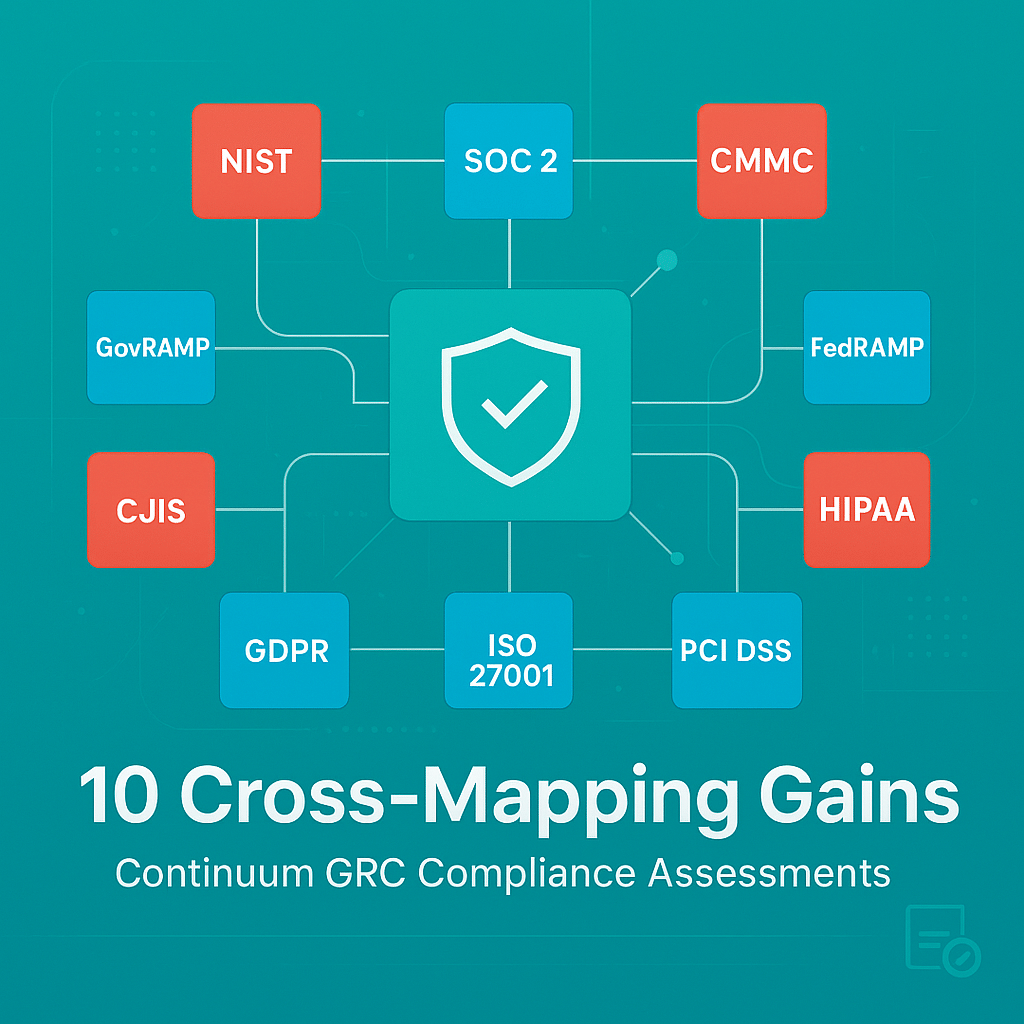
Unified control libraries enable traceability matrices that map overlapping requirements across NIST CSF 2.0, ISO 27001, SOC 2 Trust Services Criteria, NIST SP 800-53, and CMMC. This approach eliminates duplicate evidence collection for controls such as risk assessment (RA-5) and incident response (IR-4). Organizations adopting cross-mapping report measurable reductions in audit preparation time while maintaining traceability to each framework’s specific objectives.
Common Pitfalls to Avoid in 2026 CMMC Cybersecurity Audits
- Assuming suspension eliminates all assessment activity, leading to neglected SPRS submissions.
- Collecting static evidence instead of demonstrating ongoing control performance.
- Failing to integrate NIST SP 800-171 Rev. 2 updates with existing DFARS contract clauses.
- Overlooking organizational culture factors such as executive sponsorship for remediation tracking.
Frequently Asked Questions
Does the Phase 2 suspension affect existing contracts?
No. DFARS 252.204-7012 flow-down requirements and annual self-assessment obligations remain mandatory regardless of the certification pause.
How can organizations prepare for potential future C3PAO assessments?
Implement continuous monitoring and maintain audit-ready evidence repositories that satisfy both current self-assessment rules and anticipated third-party criteria.
Sources and References
- FedRAMP.gov – Latest Updates and Changelog
- NHIMG – What Is Cross-Mapping? Definition & Examples
- PCI Security Standards Council – Official PCI Security Standards Council Site
- Progression – SOC 2 in 2026: Why Point-in-Time Audits No Longer…
- Csrc.Nist – Draft Guide to OT Security
About Continuum GRC
We also provide risk management and compliance support for every major regulation and compliance framework on the market, including:
- FedRAMP
- GovRAMP
- GDPR
- NIST 800-53
- DFARS NIST 800-171, 800-172
- CMMC
- SOC 1, SOC 2
- HIPAA
- PCI DSS 4.0
- IRS 1075, 4812
- COSO SOX
- ISO 27000 Series
- ISO 9000 Series
- CJIS
- C5
- LADMF
- 100+ Frameworks
Continuum GRC is a proactive cybersecurity® and the only FedRAMP-authorized cybersecurity audit platform in the world. Call 1-888-896-6207 to discuss your organization’s cybersecurity needs and learn how we can help protect your systems and ensure compliance.
Related Posts