8 NIST Governance Compliance Assessments by Continuum GRC
8 NIST Governance Compliance Assessments by Continuum GRC
For many organizations, the hardest part of NIST CSF 2.0 and NIST SP 800-53 is not selecting controls; it is translating technical evidence into governance, risk management, and executive accountability. Continuum GRC approaches NIST governance compliance assessments from the top down: board-risk language first, auditable control evidence second, and defensible executive risk reporting throughout the lifecycle.

Read More

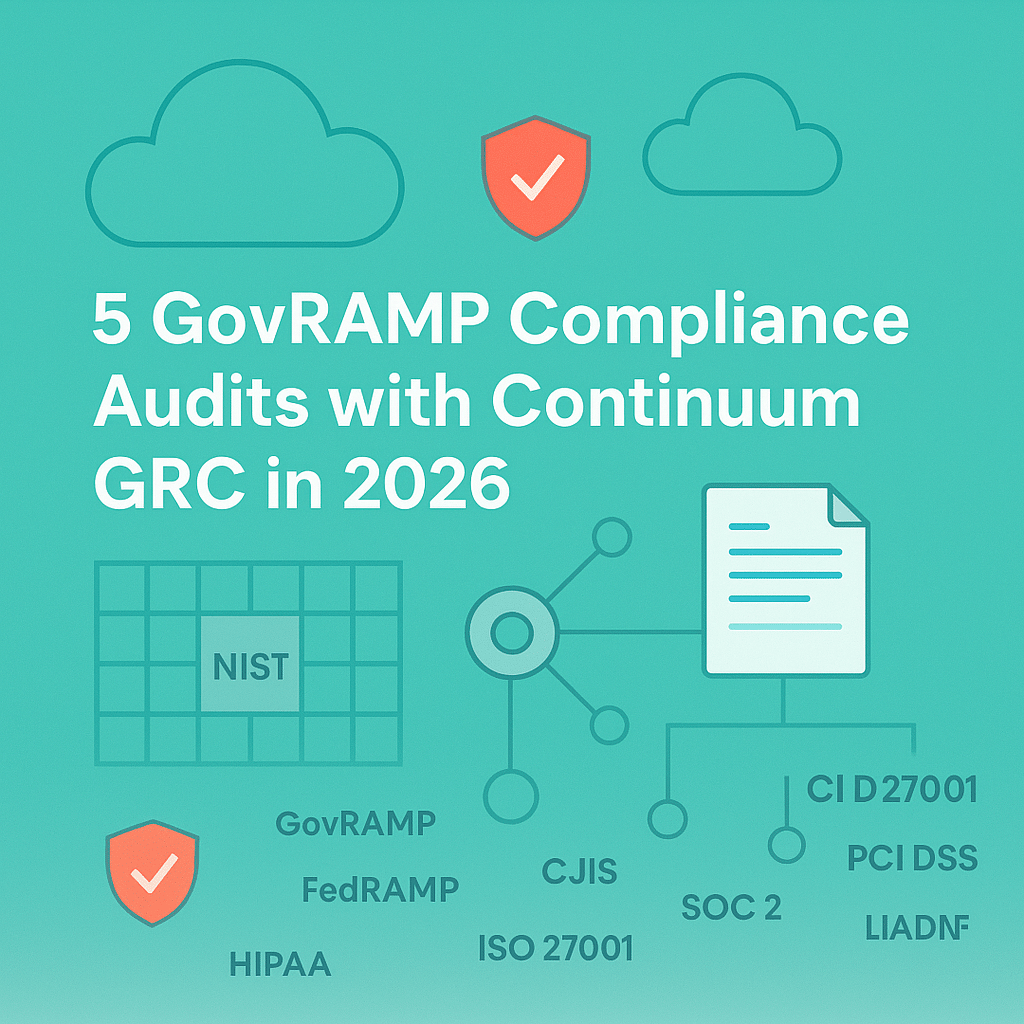
5 GovRAMP Compliance Audits with Continuum GRC in 2026

5 GovRAMP Compliance Audits with Continuum GRC in 2026

GovRAMP compliance audits are becoming a decisive SLED cloud security gate in 2026 because public-sector buyers increasingly want one security verification they can trust across many procurement decisions. The strategic shift is not simply more compliance audits; it is NIST-aligned assurance that turns GovRAMP, NIST 800-53, FedRAMP, CJIS, SOC 2, ISO 27001, PCI DSS, HIPAA, CMMC, C5, and LADMF evidence into a reusable control system instead of a stack of disconnected questionnaires.

The most important insight for cloud service providers is contrarian: the fastest GovRAMP path is rarely the narrowest GovRAMP-only project. In audit practice, organizations that scope GovRAMP as part of a cross-framework evidence architecture typically reduce duplicate interviews, avoid conflicting control narratives, and make continuous monitoring easier to sustain.

Read More

6 HIPAA Cybersecurity Audit Wins with Continuum GRC

6 HIPAA Cybersecurity Audit Wins with Continuum GRC

HIPAA cybersecurity audit readiness is no longer a paperwork exercise. For covered entities and business associates, the decisive audit question is whether ePHI safeguards, risk analysis, risk management, and operational resilience work under pressure—not merely whether policies exist. Continuum GRC helps healthcare organizations turn HIPAA audit preparation into a defensible, evidence-driven cybersecurity program that withstands regulator scrutiny, customer due diligence, ransomware stress, and board-level risk review.

The emerging insight for 2026 is simple but uncomfortable: a HIPAA audit failure is often not caused by one missing control. It is caused by weak traceability between ePHI locations, threat scenarios, safeguards, evidence, risk decisions, and remediation ownership.

Read More